How to Remove the Anodized Layer from Aluminum
Use controlled laser ablation or CNC machining to expose aluminum where a grounding point, bonding pad or shield contact needs a conductive surface. If the part only needs a logo, label or symbol, the anodized coating can stay in place.
Remove the coating · Compare marking methods · See the drawing checklist
How to Remove the Anodized Layer
Laser ablation for small areas
A controlled laser can remove the anodized layer in a defined pattern. This can suit small contact pads or areas where tool access is limited. Confirm the depth and edge quality on a sample, and verify electrical contact on the assembled joint if that is the purpose of the removal.
CNC machining for accessible contact faces
A light machining pass can expose aluminum on a reachable pad, flange or mating face. Allow for stock removal in the drawing and check the final height or flatness where it affects assembly. If the part has yet to be anodized, ask whether masking the contact area during anodizing would avoid a second operation.
Full stripping before re-anodizing
For a finish defect across the part, ask a professional anodizer to assess stripping and re-anodizing. Anodizing converts some of the original aluminum into oxide, so removing the coating changes the dimensions. Some stripping methods also attack the base metal. Measure critical bores, threads and mating faces before rework, then check them again after the new finish. Agree on an appearance sample when color or texture matters. See the Aluminum Anodizers Council guidance on stripping.
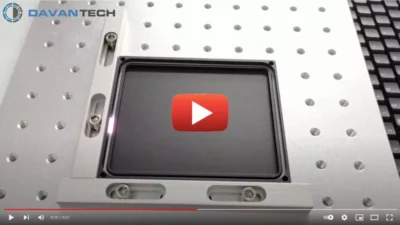
Select the image to watch the laser process.
Add Text and Symbols With the Coating Intact
For a cosmetic or identification mark, choose a process based on the shape of the part, the artwork and what the marking has to withstand in service.
Silk Screening
A stencilled mesh deposits ink onto the anodized surface. Use silk screening for labels, icons and colored artwork on flat panels.
Check color and opacity on the actual finish, then verify adhesion after curing.
Pad Printing
A flexible silicone pad transfers ink from an etched plate. Use pad printing, also called tampon printing, for small marks on shaped parts.
Check for distorted artwork on curves and uneven ink coverage near edges.
Laser Engraving Text and Symbols on Anodized Aluminum
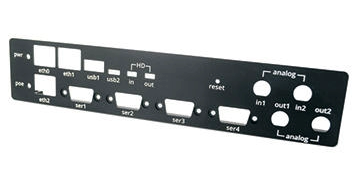
Laser-engraved port labels and control symbols on an anodized front plate.
A digital file controls the mark, so connector names, pin numbers and serial numbers can vary from part to part without a new screen or printing plate. Approve the contrast on a sample with the specified anodized finish.
When the coating must stay intact. Some laser processes can mark the finish while preserving the anodized layer. Laser ablation removes the coating. State the requirement on the drawing and agree how to verify it on a sample. A light mark alone cannot confirm coating integrity.
Technical references include Nazdar screen ink data, Marabu pad printing ink data, Epilog’s anodized aluminum marking guide, and the Coherent laser marking brief.
What to Specify Before Production
- For coating removal: identify the area and its position from drawing datums. State whether it serves as a ground or shield contact and specify the electrical acceptance test if required.
- For printed markings: provide vector artwork, dimensions, location, color and the anodized finish. Specify any cleaner, abrasion or outdoor exposure the mark must withstand.
- For laser marking that must preserve the finish: state that the anodized layer must remain intact and define how the first sample will be accepted.
For enclosure design details, see the enclosure design walkthrough. For a new part that needs a low-resistance contact area, see the Cr(III) conversion coating guide.
Anodizing Removal and Marking FAQ
How do you remove anodizing from a small area of aluminum?
Use controlled laser ablation for a small contact pad or CNC machining for an accessible face. Check the finished dimensions if the area is a mating surface, and verify electrical contact if it serves as a grounding or shielding point.
Can you laser engrave anodized aluminum without removing the anodized layer?
Some laser marking processes can create contrast while keeping the anodic layer intact. The result depends on the finish and laser settings. If the coating must remain intact, put that requirement on the drawing and agree how to verify it on a representative sample.
Should I use silk screening or pad printing on anodized aluminum?
Silk screening suits logos and labels on flat panels. Pad printing transfers smaller marks onto curved or shaped parts. Both apply ink over the finish. Check color, coverage and adhesion on the actual part after curing.
Can I avoid removing anodizing from a grounding point after finishing?
If the part has yet to be anodized, ask the finisher to mask the contact area. Show the masked area and its location on the drawing, and specify an electrical acceptance test if the joint requires one.