CNC Milling of
Plastic Enclosures
Precision-machined housings for electronics and instruments — from a single prototype to production runs, with no mould tooling and a free DFM review on every quote.
Machined Enclosures, No Mould Required
A plastic enclosure protects electronics and instrumentation — and CNC milling produces one by cutting it from a solid block or plate of engineering plastic rather than moulding it. That makes milling the right process when you need a housing fast, in low to medium volume, or with features a moulded part can’t easily give you, all without paying for an injection mould.
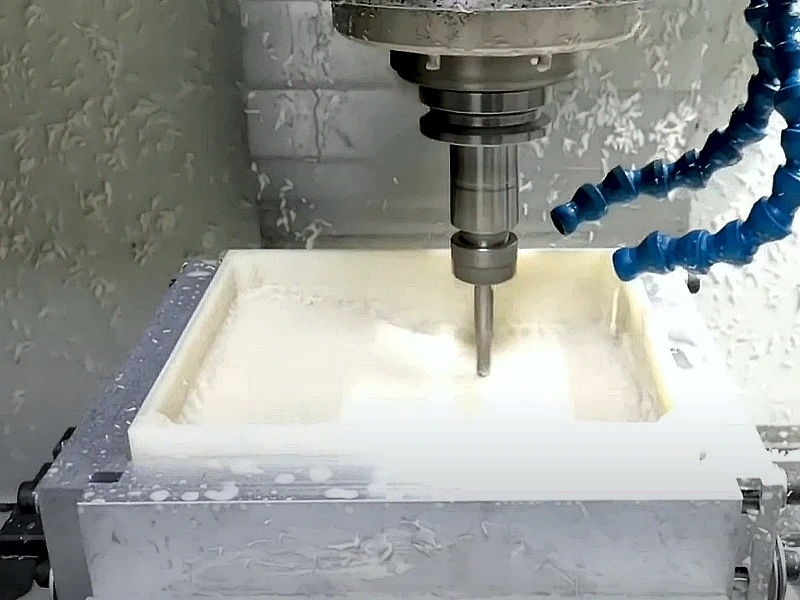
The video below shows the process on the shop floor.
How Plastic Enclosures Are Milled
It starts with a 3D CAD model of the enclosure. That model is turned into CNC toolpaths, and a 3- or 4-axis milling machine cuts the housing from a solid plate or block of engineering plastic — machining the outer form, the internal pockets that hold the PCB and components, connector and cable cutouts, mounting bosses, and holes. Plastics need sharp tools, high spindle speeds, and air or coolant to clear chips and avoid melting or burring, so tooling and feeds are set up specifically for the material. The finished parts are deburred and, where required, surface-finished and marked. Because there’s no mould, the same setup handles one piece or a few hundred, and a design change is just a change to the CAD file. See our full CNC milling capabilities for the machine side.
Why Mill an Enclosure Instead of Moulding It
Milling and injection moulding both produce plastic enclosures, but they win at opposite ends of the volume scale. Here’s the honest split.
- Tooling None — cut from stock
- Lead time Days, not weeks
- Sweet spot 1 to a few hundred parts
- Design changes Free — just edit the CAD
- Best for Prototypes, large housings, functional test units
- Tooling A mould — significant upfront cost
- Lead time Weeks for the mould
- Sweet spot Thousands and up
- Design changes Expensive once the mould is cut
- Best for Snap-fits, textures, thin uniform walls at scale
Not sure which fits your volume? See CNC machining vs injection moulding, or send your part and we’ll advise.
What Milling Gives You
The practical advantages of machining an enclosure rather than moulding or 3D printing it.
- ✓
Tight, repeatable tolerancesTypically ±0.1 mm, and ±0.05 mm on dimensionally stable plastics like POM and polycarbonate — so lids, seals, and PCBs fit properly.
- ✓
Full customisationAny cutout, boss, pocket, or opening your design needs — plus engraved labels and branding — without a mould dictating the geometry.
- ✓
A real choice of materialsABS, polycarbonate, POM, nylon, PEEK, acrylic and more — matched to strength, temperature, chemical resistance, or clarity.
- ✓
No mould costEconomical for prototypes and low-to-medium runs, where an injection mould would never pay back.
- ✓
Rapid prototypingFunctional enclosures in days, so you can test fit and form before committing to production tooling.
- ✓
Clean surface finishA smooth machined finish that can be bead-blasted, polished, or painted for a professional, finished-product look.
Plastics We Machine for Enclosures
The material sets the enclosure’s strength, temperature range, chemical resistance, and look. The common choices:
- Tough, low cost, easy to machine
- Good all-round housing material
- Paints and bonds well
- High impact strength
- Heat resistant; can be optically clear
- Great for rugged or windowed enclosures
- Stiff and dimensionally stable
- Low friction, holds tight tolerances
- Ideal for precise fits and moving parts
- Tough and wear-resistant
- Good mechanical strength
- Note: absorbs moisture — affects fit
- High temperature and chemical resistance
- Very strong engineering plastic
- For demanding medical/industrial housings
- Optical clarity
- Polishes to glass-like transparency
- For windows, lenses, display covers
Full range and properties in our materials for CNC machining guide. Machining nylon specifically? See machining PA66 / nylon.
Features and Finishes We Machine In
An enclosure is more than a box. These are the features and finishes we build into machined housings.
- PCB pockets Recesses and standoffs
- Mounting bosses For screws and components
- Cutouts Connectors, buttons, displays
- Threads & inserts Tapped holes or heat-set/press-fit inserts
- Sealing grooves For gaskets and IP-rated sealing
- Engraving Labels, logos, legends
- As-machined Clean, functional finish
- Bead blasted Uniform matte texture
- Vapor polished Clarity on PC and acrylic
- Painted Any colour, matte or gloss
- Silk-screen / print Branding and markings
A note on tolerances: plastics expand and move more than metals, and nylon absorbs moisture, so we design fits and wall thicknesses with that in mind. Our tolerances guide explains how to specify them sensibly.
Where Machined Enclosures Are Used
Milled plastic housings suit any product that needs a precise, protective enclosure without the volume to justify a mould.
- PCB and module enclosures
- IoT and sensor devices
- Power and control units
- Handheld instrument bodies
- Test and lab equipment
- Display and panel housings
- Device and diagnostic housings
- PEEK and polycarbonate bodies
- Clean, sealable enclosures
- Front panels and fascias
- Connector and interface plates
- Machined cutouts and legends
- Functional test enclosures
- Design validation before tooling
- Bridge production before moulding
- Rugged control housings
- Sealed (IP-rated) enclosures
- Chemical-resistant bodies