
Custom Aluminum CNC Machining
Davantech provides CNC machining for custom aluminum parts. We mill and turn parts to your drawing in Dongguan, China.
Alloys. 6061, 6082 and 7075. See our aluminum alloys guide.
Order size. Single-piece prototypes, small batches of 10–500 parts and larger production runs.
Quotes. We aim to quote within 24 hours of receiving complete drawings and requirements. Larger requests with multiple parts may take up to 48 hours.
See our full CNC machining services.
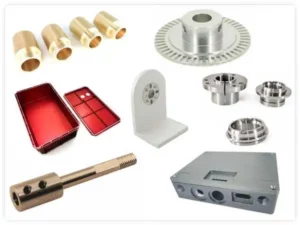
6061, 6082 and 7075, the alloys we machine
Most aluminum parts are made from one of these three. The grade sets the strength, the anodizing
quality and the price, so it is worth getting right.
6061-T6 is a common choice for brackets, housings and enclosures. It balances strength, machinability and anodizing appearance. If your drawing leaves the alloy open, tell us how the part is used so we can recommend a grade and confirm it with you before production.
6082-T6 is the structural grade favoured in Europe and the UK. It carries more load than 6061 and resists corrosion well, so it suits frames, mounts and parts that take real stress. It machines a touch slower than 6061 but holds tolerance just as well.
7075-T6 is the high-strength, aerospace-grade alloy, approaching some steels in strength while staying light. Use it where a part is highly loaded or weight-critical. It costs more, anodizes less cosmetically and is less corrosion resistant than 6061, so it is a choice for performance rather than looks.
Note: 6061 is the default for a reason, it balances strength, machinability and a clean anodized finish. If your drawing calls a different alloy, we source to spec and provide material documentation as agreed at quotation.
Why engineers reach for aluminum
It is not just that aluminum is cheap to cut. It hits a balance of weight, strength and finish that
few materials match, which is why it turns up in everything from enclosures to robot arms.
-
Light but strong
At about 2.7 g/cm³, aluminum is roughly a third the weight of steel, yet the right alloy and temper give it a high strength-to-weight ratio. That matters for anything that moves, flies or has to be carried, and it lowers shipping weight on volume parts.
-
Fast and cheap to machine
Aluminum cuts at high spindle speeds with clean, well-behaved chips, so cycle times are short and tool wear is low. Shorter cycles mean lower machining cost, which is why aluminum prototypes and small batches are so economical.
-
Corrosion resistant
Aluminum forms a thin natural oxide layer. Anodizing grows a thicker oxide layer that can improve corrosion or wear resistance. The result depends on the alloy, coating type, sealing and service conditions.
-
Anodizing options
It takes clear, black or colored anodizing, plus hard anodizing for wear surfaces. One part can be both functional and cosmetic, and color can separate product variants without a separate paint step.
-
Conductive and non-magnetic
Aluminum conducts heat and electricity well and is non-magnetic, which makes it the default for heat sinks, cooling plates and RF or electronics enclosures where steel would interfere.
-
Recyclable
Aluminum chips and offcuts can be recycled. If your project specifies recycled content, include the requirement with the alloy and stock form so availability can be checked.
Designing aluminum parts that machine cheaply
A few choices in CAD decide how fast and how cheaply a part machines. Keep these in mind and your
quote comes back lower, with fewer questions from us.
Not sure how to call something out? Our guide to CNC tolerances
shows how to specify them, and how much CNC machining costs
breaks down what actually moves the price. Or just send the model and we will flag anything in the free DFM review.
What we can machine and deliver
- Processes3 and 4-axis milling, CNC turning, threading, tapping, reaming
- Alloys6061, 6082, 7075 (others to spec)
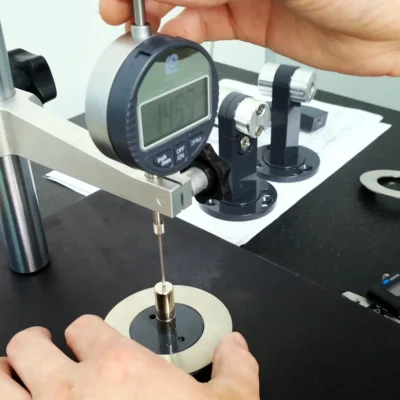
- Critical tolerancedown to ±0.01 mm on selected features, subject to drawing review
- General toleranceISO 2768-m, according to nominal dimension
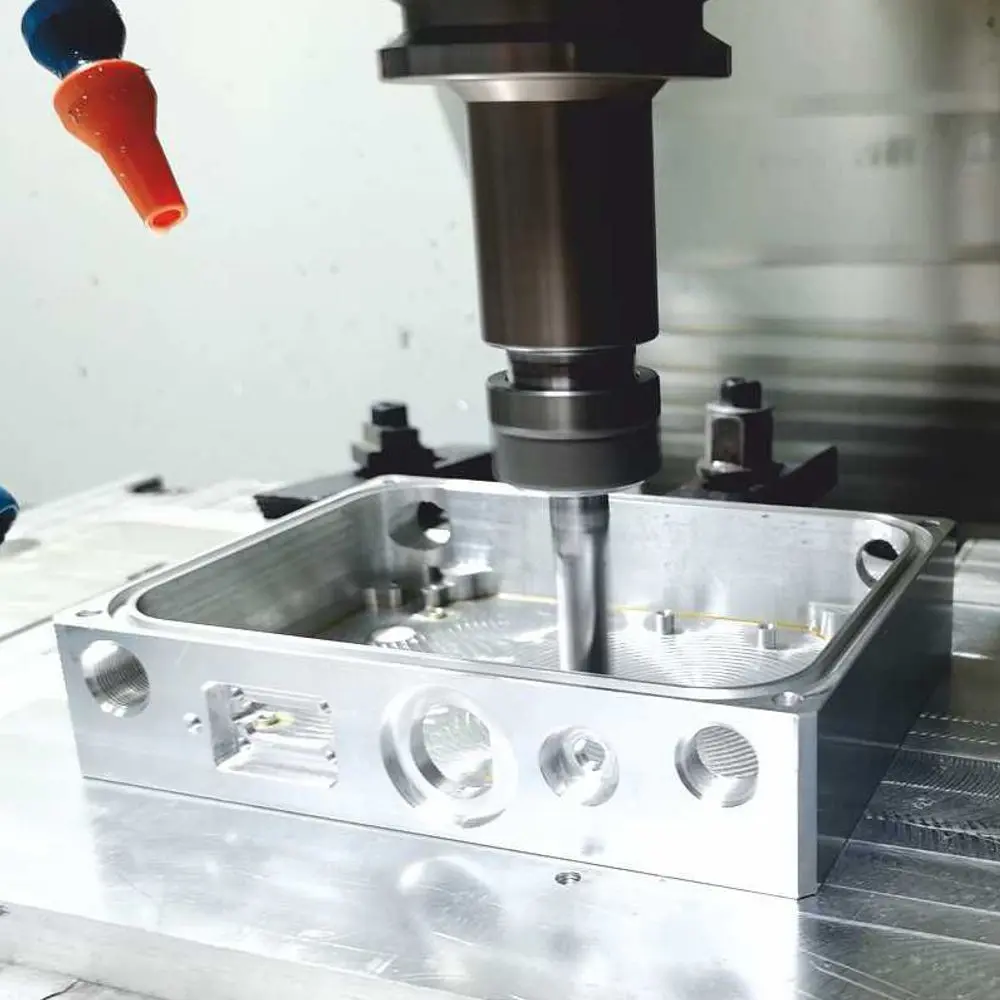
- Finishesanodize, bead-blast, brushed, polished
- Certificatesdocumentation agreed at quotation
- DFMfree review before we cut
- Inspectionfull QC to ISO 9001:2015, reports on request
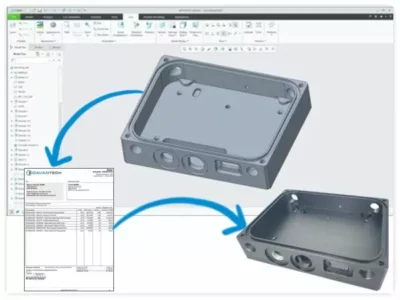
From CAD file to finished part
Five steps, whether it is one prototype or a production run.
Finishes for aluminum parts
Anodizing can protect aluminum and provide a clear or colored finish. Alloy, temper and surface preparation affect the final appearance. For parts that must match, agree on a sample using the intended stock and preparation.
Under MIL-PRF-8625, Type II sulfuric anodizing is commonly used for clear or colored finishes. Type III hard anodizing is used where wear resistance matters. Specify any required thickness or sealing, and mark threads, bores and grounding faces that need masking.
What to specify for anodizing. Mark cosmetic faces and areas to mask on the drawing, including any grounding surfaces that must stay bare. Provide a color reference if appearance matters. Identify bores, threads and mating faces that must meet their specified dimensions after finishing. For example, on a shaft mounting block, specify whether the bore should be masked or measured to size after anodizing. If the part needs a low-resistance grounding pad, see the Cr(III) conversion coating guide.
Also available: powder coating and wet paint on request, and laser or ink marking for logos and part numbers. See the capabilities section for tolerances and mark any dimensions that must be checked after finishing.
Parts we machine in aluminum
Aluminum shows up wherever weight, heat or looks matter. Its mix of light weight, conductivity and a
clean anodized finish makes it the first choice across electronics, machinery and robotics. These are
the jobs it does most for our customers.
- Housings and enclosures
- Front panels and faceplates
- LED and sensor parts
- Connector bodies
- Brackets and plates
- Adapters
- Standoffs and spacers
- Mounting hardware
- Heat sinks
- Cooling plates
- Thermal blocks
- Housings for power electronics
- Frames and arms
- Jigs and fixtures
- End effectors
- Prototype parts
Send your drawing if you want us to review the alloy, finish or fit requirements for a different part.
Examples of CNC machined aluminum parts
For a custom housing, compare billet machining, extrusions and castings on our custom aluminum enclosures page.

Milled aluminum shaft mounting block
- A CNC-milled block with pre-drilled mounting holes and a bore sized to the shaft. The pictured version has a black anodized finish.

Gold-anodized CNC-turned aluminum parts
- CNC-turned aluminum components with a gold anodized finish. Specify the finished diameter and thread requirements on the drawing when fit matters.
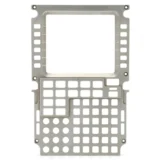
CNC-milled avionics front bezel
- A machined aluminum bezel for an electronics enclosure. The front opening and mounting features are defined by the mating components.
Why buyers machine aluminum with us
Plenty of shops can cut aluminum. Here is what you get by sending the job to Davantech.
No minimum order. from a single prototype to a full production run, priced either way.
Quote turnaround. We aim to quote within 24 hours of receiving complete drawings and requirements. Larger requests with multiple parts may take up to 48 hours.
ISO 9001:2015. inspection before shipment, with dimensional reports and material documentation agreed at quotation.
European engineering management. your drawings are read and reviewed the way Western customers expect, which cuts back-and-forth.
Free DFM up front. we flag thin walls, tight tolerances and cost drivers before cutting, not after.
One supplier for more. brass, stainless and engineering plastics machined alongside aluminum, plus partner-managed finishing and in-house assembly in one order.
Aluminum machining questions
Which aluminum grade is best for CNC machining?
6061 for most parts, it has the best mix of machinability, strength and clean anodizing. Choose 6082 for higher-strength structural parts, and 7075 when you need the highest strength. We machine all three and will advise the right one for your part.
What tolerances can you hold on aluminum parts?
General dimensions to ISO 2768-m, according to nominal dimension, down to plus or minus 0.01 mm on critical features. Send your drawing so we can confirm these capabilities for your material, geometry and critical features before cutting.
Can you anodize aluminum parts?
Yes. We offer clear, black and colored anodizing, plus hard anodizing for wear surfaces. Specify any required color match, masking and dimensions that apply after finishing. Bead blasting, brushing, polishing and powder coating are also available on request.
Do you machine prototypes and small batches?
Yes, from single prototypes and small batches through to full production, with no minimum order quantity.
How fast can you quote and deliver?
We aim to send your quotation within 24 hours of receiving complete requirements. Larger requests with multiple parts may take up to 48 hours to quote. CNC samples typically take about 15 days and standard production about 30 days; material, geometry, finishing and quantity can affect the schedule. Shipping time is additional.
Do you provide material documentation and inspection reports?
Include material documentation and dimensional reporting requirements with your RFQ. We confirm available documentation and the inspection scope at quotation.
For a drawing quote, send a STEP file and dimensioned drawing, alloy and temper, order quantity, finish and any inspection or material-documentation requirements.
Request an aluminum machining quote