Overmolded Temperature & Humidity Sensor
Two measurements in one custom probe. Davantech developed this temperature and humidity sensor assembly with a PCB, cable, molded body and integrated mounting flange.
Overmolding brings the electrical assembly and mechanical mounting together, reducing separate parts and assembly work. The design combines a practical installation shape with a two-stage approach to the probe’s surface finish.
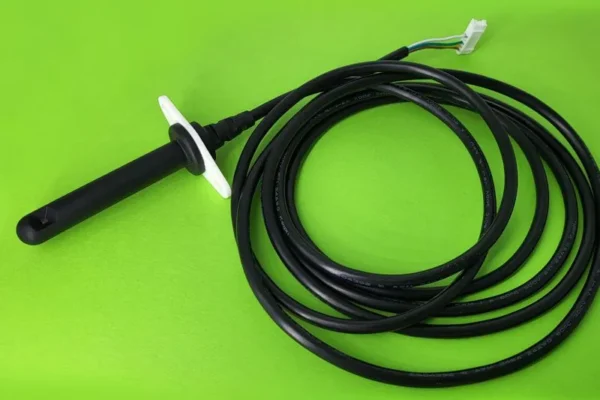
Temperature and humidity in one assembly
Sensing component, PCB and cable
Molded probe and overmolded flange
Main body followed by a finishing layer
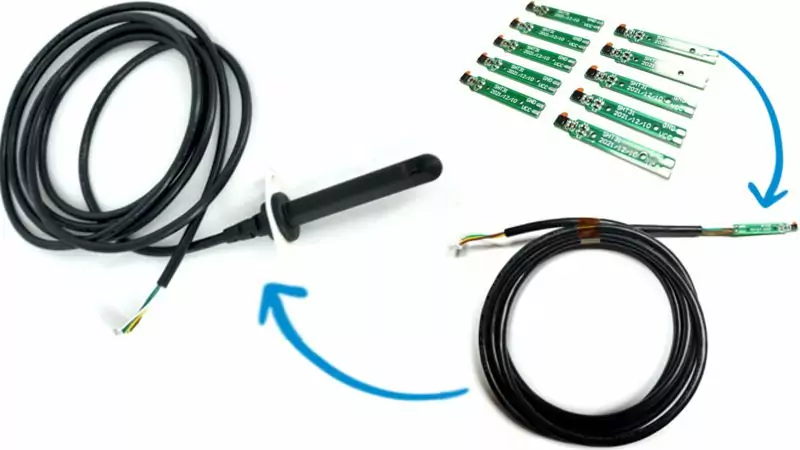
One probe. Two measurements.
The PCB and cable are assembled before molding. A custom probe body and overmolded mounting flange bring measurement and installation together, reducing separate components.
01 · Form the probe body
The first molding stage creates the main plastic volume around the prepared assembly.
02 · Finish the surface
A second layer improves the visible finish, addressing sink marks or unevenness from shrinkage in the main body.
Protect the assembly. Keep the sensing area open.
Three design checks help the finished probe measure its surroundings reliably.
Air access
Keep the sensing opening clear. Define the air path and any membrane with the sensor supplier. Check response time in the finished housing.
Thermal separation
Measure the air, not nearby heat. Review heat from the PCB and mounting surface. It can affect both temperature and relative humidity readings.
Clean processing
Protect the sensitive element. Check molding materials, adhesives and cleaning agents. Follow the sensor supplier’s handling and processing limits.
Define the fit. Verify the performance.
Agree the interfaces and acceptance tests before tooling. For material selection, compare TPE and TPU and check cable-jacket compatibility.
Design inputs
Define the mold geometry, material interfaces and mounting.
- Cable: jacket, diameter, routing and pull resistance.
- Mounting: flange geometry, fit and installation loads.
- Body: wall sections, surface finish and sensing opening.
Acceptance checks
Check measurement, mechanical fit and environmental protection.
- Measurement: temperature, humidity, accuracy and response.
- Mechanics: flange fit, cable pull and flex requirements.
- Environment: required condensation, splash and ingress tests.
Temperature & humidity sensor FAQ
Start with the measurement specification, then define the housing, cable and mounting around it.
For broader electronics and cable manufacturing, visit our overmolding services page.
Does this probe measure temperature and humidity together?
Can the humidity-sensing area be completely covered with plastic?
What accuracy, range and electrical output are available?
Is the overmolded temperature and humidity sensor waterproof?
What should I send for a custom sensor quotation?
Plan your custom
temperature & humidity sensor
Bring the sensing requirements, electronics and mechanical interfaces into one manufacturing enquiry.
- Sensor datasheet and PCB drawings
- Probe, flange and cable specifications
- Sample and production quantities
- Operating conditions and acceptance tests