
What Is Overmolding?
Overmolding is a multi-shot injection molding process where a second material, typically a soft TPE or TPU, is molded directly over an existing substrate part. The result is a single integrated component combining the rigidity of the base material with the flexibility, grip, or sealing properties of the overmold layer.
Compared with post-molding assembly, overmolding offers several important advantages:
How it works:
The rigid substrate: Cable assembly, plastic housing, or metal component, is positioned precisely in the overmold cavity.
Molten TPE, TPU, or soft resin is injected over and around the substrate at controlled temperature and pressure.
The overmold material bonds to the substrate through chemical adhesion and mechanical interlocking geometry.
Parts are ejected and verified for bond integrity, dimensional accuracy, and surface finish quality.


Core Services
Our Overmolding Capabilities
We specialise in four primary overmolding applications for cable assembly, electronics, and consumer product manufacturers worldwide.

Cable Strain Reliefs
We overmold TPE or TPU at the cable-to-connector junction to absorb repeated flex stress and prevent wire fatigue. Custom geometry matches cable diameter, bend radius, and pull-out force requirements. This solution is suitable for power cables, data cables, and custom wire harnesses.
Round & flat cable profiles · PVC/TPE jacket compatible · UL94-rated available

Grommets & Cable Seals
We use this process to make custom made overmolded grommets for IP-rated cable entries through panels, enclosures, and bulkheads. To clarify, the soft TPE forms a compression seal against the material it is mounted to, as such accommodating cable movement while maintaining ingress protection ratings from IP54 to IP68.
IP54–IP68 sealing · Panel & bulkhead fitting · Custom bore diameters
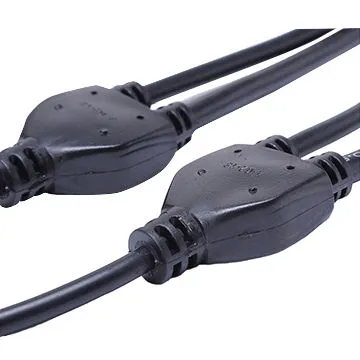
Cable Splitters & Y-Connectors
Multi-way cable splitters and Y-junction connectors with integral overmolded housings protecting the wire split point. Maintains strain relief on every branch, with custom geometry for 2-way, 3-way, or multi-port configurations used in automotive harnesses and industrial wiring.
2-way · 3-way · Multi-port · Automotive & industrial grades

Plastic-over-Plastic
Soft TPE or TPU overmolded directly onto a rigid PC, ABS, or PP substrate to create ergonomic grips, soft-touch housings, and vibration-dampening surfaces. Ideal for power tool handles, medical device grips, and consumer electronics enclosures requiring multi-material aesthetics.
Soft-touch grips · Two-shot aesthetics · Seals · Shore 30A–80A overmold
Substrate & Overmold Materials
We work with a broad range of substrate and overmold material combinations to match your mechanical, thermal, chemical resistance, and regulatory requirements.
SUBSTRATE MATERIALS
- ABS & ABS/PC Blend
- Polycarbonate (PC)
- Nylon PA66 (GF available)
- Acetal (POM)
- Polypropylene (PP)
- Metal (brass, steel, aluminium)
OVERMOLD MATERIALS
- TPE (Thermoplastic Elastomer)
- TPU (Thermoplastic Polyurethane)
- SEBS-based soft compounds
- PVC (Flexible / Semi-rigid)
- Silicone (LSR)
- Santoprene & equivalents
COMPLIANCE & GRADES
- RoHS & REACH compliant
- UL94-V0 flame retardant
- Halogen-free compounds
- Food-contact grades (FDA)
- ATEX / industrial grades
- Custom color matching
Common Overmolding Configurations
TPE over ABS housing (soft-touch)
PVC over cable termination
SEBS over PP grip handle
TPU over PVC cable jacket
TPE over PA66 connector body
Soft TPE grommet on rigid frame
Silicone over PC substrate
TPU over metal back shell
Two-colour aesthetic overmold
Our Process
From your first inquiry to final delivery, we manage every step — tooling, production, inspection, and shipping.
Manufacturing Specifications
| Parameter | Specification |
|---|---|
| Shot Weight | 0.1 g – 150 g |
| Clamping Force | 20 – 50 tons |
| Max Cable Diameter | Up to 22 mm |
| Overmold Wall Thickness (multiple shots) | ±1.2 – 10 mm |
| Shore Hardness Range | 20A – 95A |
| Dimensional Tolerance | ±0.1 mm |
| Cavity Configuration | 1 – 2 cavities |
| Annual Capacity | Up to 5 million parts |
| Production Lead Time Molds | 3 – 4 weeks |
| Production Lead Time Series | 2 – 4 weeks or Continuous |
| Minimum Order Qty | 1,000 – 5,000 pieces |
The overmold enclosure is produced in a single molding step. No adhesives, clips, or manual assembly required.
Molded strain relief distributes bend stress over a longer length, dramatically improving flex fatigue resistance.
Overmolded TPE seals at cable entry points achieve IP54–IP68 without separate gaskets or potting compounds.
Compatible material pairs bond chemically during molding, creating a joint stronger than any mechanical or adhesive alternative.
Overmold geometry and color can be customised independently of the substrate, enabling two-tone aesthetics and branding.
We can overmold onto cable assemblies or plastic parts you supply, or manufacture the complete assembly in-house.
Applications & Industries
Davantech’s overmolded components are used across demanding industries worldwide, wherever cables, connectors, and multi-material assemblies must perform reliably.
AUTOMOTIVE
- Wiring harness strain reliefs
- Grommet seals for body panels
- Sensor cable overmolds
- Y-splitter junction housings
ELECTRONICS
- USB & power cable strain reliefs
- PCB edge & connector seals
- Soft-touch device enclosures
- Cable assembly overmolds
MEDICAL
- Probe & sensor cable reliefs
- Ergonomic tool & device grips
- Fluid line connector seals
- Wearable device soft-touch shells
INDUSTRIAL
- Heavy-duty cable connectors
- Panel & bulkhead grommet seals
- Vibration-dampening mounts
- Outdoor-rated cable assemblies
TELECOM
- Patch cable strain reliefs
- Fibre optic cable boots
- Outdoor rated connector hoods
- Data cable junction overmolds
CONSUMER PRODUCTS
- Power tool soft-grip handles
- Charger & earphone cable reliefs
- Smart home device grips
- Garden & sporting equipment
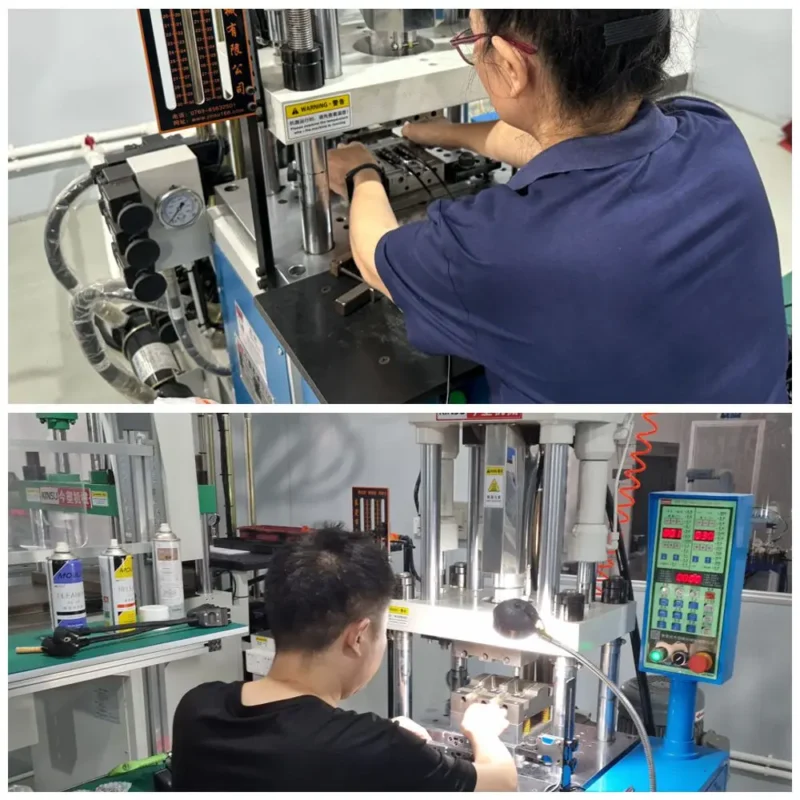
Built-In Quality
Every overmolded part is inspected for bond integrity, dimensional accuracy, and seal performance before it leaves our facility. Our ISO 9001:2015 certified processes ensure consistency across every production run.
Overmolding Services FAQ
What is overmolding?
Overmolding is a manufacturing process in which a second layer of plastic or elastomer is molded over a base substrate. The substrate can be a rigid plastic part, cable, connector, or other component. Overmolding is used to improve grip, sealing, protection, strain relief, and overall product durability.
What is the difference between overmolding and insert molding?
Overmolding adds a second material layer over an existing part, usually to improve function or appearance. Insert molding places a non-plastic component such as metal into the mold before plastic injection so the insert becomes permanently integrated into the finished part.
What materials are used in overmolding?
Common overmolding materials include TPE, TPU, silicone-like thermoplastic elastomers, PVC, ABS, PC, PA, and PP depending on the product structure and performance requirements. Material selection depends on adhesion, flexibility, chemical resistance, temperature resistance, and end-use environment.
What substrates can be overmolded?
Overmolding can be applied to plastic substrates, cable assemblies, connectors, electronic housings, and selected metal components when the part design and material compatibility support reliable bonding and production stability.
What overmolding services does Davantech provide?
Davantech provides overmolding services for cable assemblies, connector strain reliefs, protective covers, sealing features, soft-touch grips, and custom plastic components. We support both functional overmolding and cosmetic overmolding for industrial and electronic applications.
Why is overmolding used on cables and connectors?
Overmolding is widely used on cables and connectors to create strain relief, protect the termination area, improve sealing, reduce flex damage, and increase durability in repeated-use or demanding environments.
Can overmolding improve water and dust resistance?
Yes. Overmolding can help improve resistance to water, dust, and contaminants by encapsulating critical areas and creating a more protected interface around cables, connectors, and housings. The final level of sealing depends on part geometry, material choice, and process control.
Can Davantech use customer-supplied parts for overmolding?
Yes. Davantech can evaluate customer-supplied cable assemblies, connectors, housings, and other components for overmolding compatibility, tooling feasibility, and production reliability before project approval.
What are the main design rules for overmolding?
Important overmolding design factors include substrate geometry, material compatibility, bonding area, wall thickness, undercuts, gate location, flow path, venting, and shrinkage behavior. These factors affect adhesion, appearance, dimensional stability, and long-term performance.
Why choose Davantech for overmolding services in China?
Davantech is an ISO 9001:2015 certified manufacturer in China with in-house tooling support, engineering review, controlled production processes, and worldwide delivery. We focus on practical overmolding solutions for cables, connectors, and custom plastic components with reliable manufacturing quality.
How do I request a quote for overmolding services?
Send Davantech your drawings, 3D files, substrate details, required overmolding material, annual volumes, and any performance or compliance requirements. This allows us to review tooling, manufacturability, bonding considerations, and production cost accurately.
Ready to Start Your Overmolding Project?
Send us your drawings and 3D files or describe your requirements with enough detailed information. We’ll respond with a free DFM review and competitive quote within 24 hours. Production from 1000 pieces.