CNC Machining of
Aluminum 6061-T6
Properties, alloy comparisons, machining guidance, tolerances, finishing, and applications of the most widely machined aluminium alloy — with real production insight from a working factory.
What Is 6061-T6 Aluminum?
6061 is a precipitation-hardened aluminium alloy from the 6000 series, with magnesium and silicon as its principal alloying elements. The T6 temper means it has been solution heat-treated and then artificially aged, raising its strength and hardness well above the annealed condition.
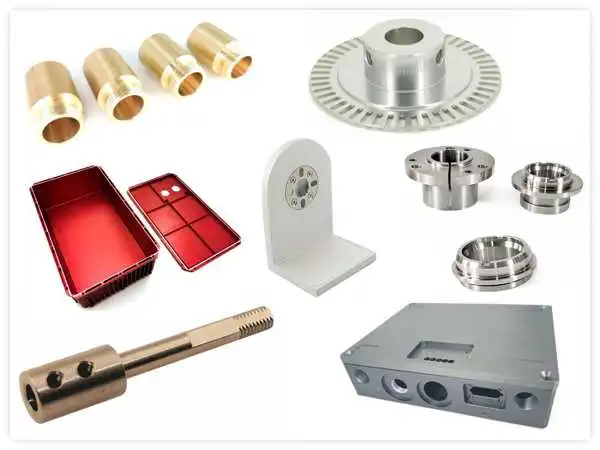
The result is a general-purpose structural aluminium that machines cleanly, welds well, anodizes attractively, and resists corrosion — a rare combination that makes 6061-T6 the default choice for a huge range of machined parts, from enclosures and brackets to fixtures and precision components. It is one of the most requested alloys we machine.
- ✓
Excellent machinabilityClean chip formation, high cutting speeds, and low tool wear keep cycle times and cost per part low.
- ✓
Corrosion resistanceNaturally resistant to corrosion, suiting outdoor and harsh-environment parts without heavy protective coatings.
- ✓
Good weldabilityWelds far more readily than high-strength grades such as 7075, making fabricated assemblies practical.
- ✓
Anodizes beautifullyTakes clear and coloured anodizing to a hard, corrosion-resistant finish — ideal for visible enclosures.
- ✓
Low material costInexpensive relative to most metals and to higher-strength aluminium grades — strong performance per dollar.
- ✓
Free DFM review with every quoteOur engineers check wall thickness, radii, tool access, and tolerances before production, so issues are caught at zero cost.
Mechanical and Physical Properties
Typical property values for 6061-T6. Values are representative; certified figures for a specific batch come from the supplier’s mill test certificate.
| Property | Typical Value | Units / Notes |
|---|---|---|
| Ultimate Tensile Strength | ~ 310 | MPa (≈ 45,000 psi) |
| Yield Strength (0.2% offset) | ~ 276 | MPa (≈ 40,000 psi) |
| Shear Strength | ~ 207 | MPa (≈ 30,000 psi) |
| Fatigue Strength (approx.) | ~ 96.5 | MPa |
| Elastic (Young’s) Modulus | ~ 68.9 | GPa |
| Elongation at Break | 12 – 17 | % |
| Brinell Hardness | ~ 95 | HB |
| Density | 2.70 | g/cm³ |
| Thermal Conductivity | ~ 167 | W/m·K |
Composition (wt %): Si 0.40–0.80 · Fe ≤ 0.70 · Cu 0.10–0.40 · Mg 0.8–1.2 · Cr 0.04–0.35 · Zn ≤ 0.25 · Ti ≤ 0.15 · Mn ≤ 0.15 · balance Al. See our guides to aluminium alloys for CNC machining and materials for CNC machining.
6061-T6 vs 7075-T6 vs 2024-T3
6061-T6 is rarely the strongest option, but it is usually the most balanced. Blue cells show where 6061-T6 leads.
| Property | 6061-T6 | 7075-T6 | 2024-T3 |
|---|---|---|---|
| Ultimate tensile strength | ~ 310 MPa | ~ 572 MPa | ~ 483 MPa |
| Yield strength | ~ 276 MPa | ~ 503 MPa | ~ 345 MPa |
| Density | 2.70 g/cm³ | 2.81 g/cm³ | 2.78 g/cm³ |
| Corrosion resistance | Excellent | Moderate | Low–moderate |
| Weldability | Good | Poor | Poor |
| Machinability | Very good | Fair–good | Good |
| Relative material cost | Low | High | Medium–high |
| Typical use | General structural, enclosures, brackets | High-stress aerospace, tooling | Fatigue-critical aerospace |
Choose 7075-T6 for maximum strength, 2024-T3 for fatigue-critical aerospace structures, and 6061-T6 for almost everything else — especially where a part will be welded, anodized, or exposed to weather.
Machining 6061-T6: Milling and Turning
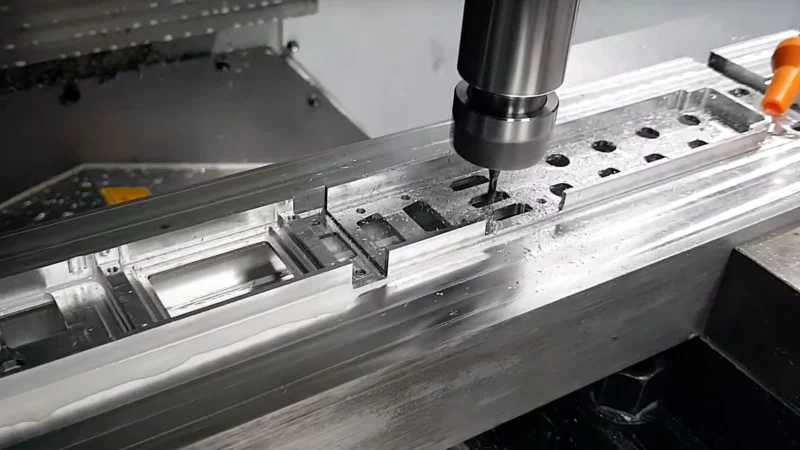
CNC machining of 6061-T6 cuts the alloy to a precise shape from bar, plate, or billet. The two core processes are milling and turning, and most production parts use a combination of both.
- Ideal for Housings, brackets, plates, enclosures
- Features Pockets, slots, faces, holes, 3D geometry
- Axes 3-axis and 4-axis
- Tolerance ±0.02 – 0.05 mm standard
- Ideal for Shafts, pins, bosses, connectors
- Features Diameters, threads, grooves, bores
- Options Conventional and live-tooled turn-mill
- Tolerance ±0.01 – 0.03 mm standard
Many parts need both. Davantech plans milling and turning together at DFM stage to minimise setups.
Machinability, Tooling and Chip Control
6061-T6 is one of the most machinable structural aluminium alloys. It forms clean, well-broken chips, tolerates high spindle and surface speeds, and produces excellent finishes with modest tool wear — noticeably easier to cut than 7075, which means faster cycle times and lower cost per part than most metals.
Design choices drive cost: very small internal radii force smaller tools and slower passes, thin walls risk deflection, and deep pockets can exceed tool reach. Our instant quote tool flags undersized radii, thin walls, and deep pockets automatically. See also the cutting tools we use.
Tolerances on 6061-T6
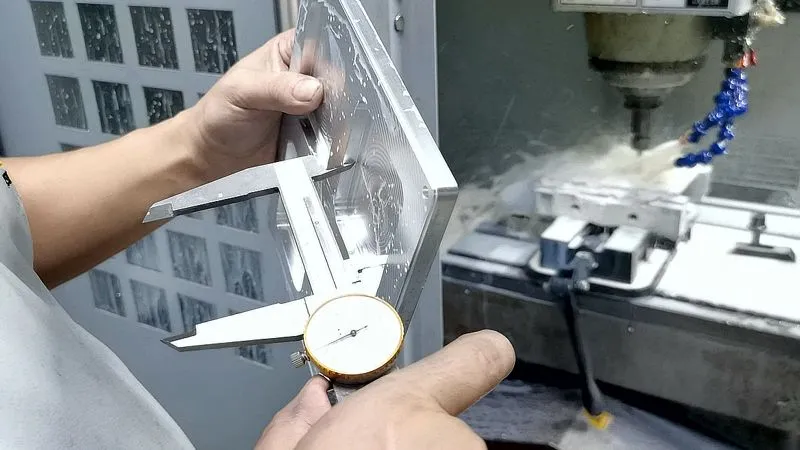
CNC machining of 6061-T6 is highly precise, with tolerances as tight as ±0.001 in (±0.025 mm) achievable on suitable features. Because the alloy is dimensionally stable and machines predictably, it holds tolerance well across a run. What is realistic for a given feature depends on its size, geometry, and finish — our guide to CNC machining tolerances explains how to specify them without over-tightening and driving up cost.
Finishing and Anodizing 6061-T6
6061-T6 finishes beautifully, which is part of its appeal for visible parts and enclosures. It anodizes well in both clear and coloured finishes, giving a hard, corrosion-resistant surface.
- As-machined
- Bead / sand blasted
- Brushed
- Polished
- Type II (clear and colour)
- Type III (hard anodizing)
- Durable, wear-resistant
- Ideal for visible housings
- Cr3 conversion coating
- Electroless nickel plating
- Powder coating
- Chromate / passivation
See our notes on Cr3 surface treatment and removing an anodized layer. For formed parts, see 5 ways to fabricate aluminium parts.
Where 6061-T6 Is Used
Because it balances strength, weight, corrosion resistance, and cost, 6061-T6 appears across almost every industry we serve.
- Brackets and fittings
- Non-primary structural parts
- Weldable, corrosion-resistant components
- Housings and mounts
- Heat-dissipating parts
- Structural brackets
- Device bodies
- Anodizable fixtures
- Instrumentation parts
- Machined aluminium housings
- Heat sinks and thermal plates
- Connector and panel parts
- Jigs and fixtures
- Plates and mounts
- General precision components
- Aluminium product housings
- Front panels
- Prototype functional parts
Aluminum 6061-T6 Questions
Is 6061-T6 aluminium easy to machine?
Yes. 6061-T6 is one of the most machinable structural aluminium alloys. It forms clean chips, runs at high cutting speeds, and gives excellent surface finishes with low tool wear, which keeps cost per part low.
What is the difference between 6061-T6 and 7075-T6?
7075-T6 is much stronger (about 572 MPa tensile versus 310 MPa) but has poorer corrosion resistance and weldability and costs more. 6061-T6 offers a better all-round balance for general structural, enclosure, and weldable parts.
What tolerances can be held on 6061-T6?
Tolerances as tight as ±0.001 in (0.025 mm) are achievable on suitable features. The realistic tolerance depends on feature size, geometry, and finish.
Can 6061-T6 be anodized?
Yes. 6061-T6 anodizes well in both clear and coloured finishes, producing a hard, corrosion-resistant surface that suits consumer and industrial housings.
What are common uses of 6061-T6 aluminium?
Aerospace brackets and fittings, automotive and EV housings, medical device bodies, electronic enclosures and heat sinks, and a wide range of industrial fixtures and precision parts.