
CNC Machining Brass Parts
Precision brass parts, machined to your drawing
management. The grade we run most is C360 free-cutting brass, the industry benchmark for
machinability, used for valves, fittings, connectors and precision turned parts. Every job gets a
free DFM review before we cut, and material or mill certificates are available on request.This page covers the brass grades we machine, the tolerances and finishes you can expect, our
process, and the parts brass suits best. Brass machining is part of our
CNC machining service. If you are still choosing a material,
see the full list of CNC materials, and for why buyers
source machined parts from us, read CNC machining in China.
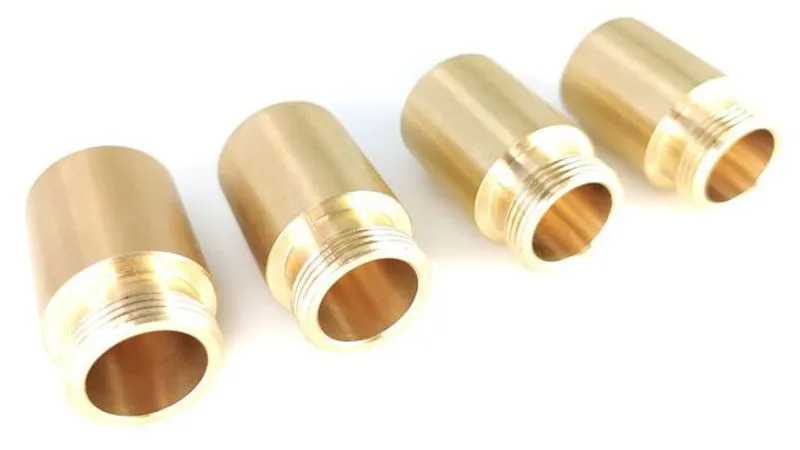
What makes brass good to machine and to use
Brass earns its place for two reasons: it is the easiest common metal to cut, and the finished
parts perform well in the field. Those two facts are why it dominates valves, fittings and
electrical hardware.
-
Best-in-class machinabilityCuts fast with low tool wear, holds tight tolerances and produces clean threads. This is what keeps the price per part down.
-
Leak-tight sealingDimensional stability and a fine surface finish make brass the default for pressure-tight valves, fittings and couplings.
-
Corrosion resistanceResists water and air corrosion for a long service life with little maintenance, which suits plumbing and outdoor hardware.
-
Electrical and thermal conductivityA good conductor, so brass is widely used for terminals, connectors, contacts and sensor bodies.
-
Low friction and wearRuns smoothly against steel, which makes it a solid choice for bushings, bearings and moving parts.
-
Non-magnetic, non-sparkingSuited to instruments and sensitive or hazardous environments where steel is a problem.
-
Attractive finishPolishes to a bright gold surface, so it works for visible hardware, knobs and trim without paint or plating.
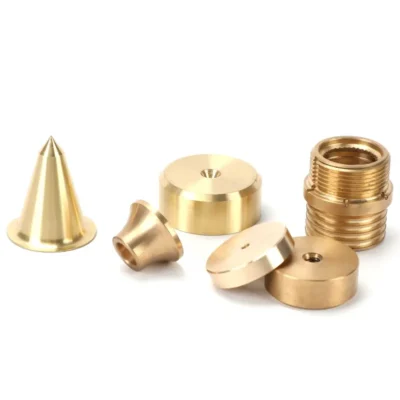
C360 and the grades we machine to
Not all brass machines the same. C360 free-cutting brass is the one built for the lathe and mill,
and it is what we run as standard. The table below shows how it compares with the two other brasses
you are most likely to see on a drawing.
| Property | C360 free-cutting | C260 cartridge | C385 architectural |
|---|---|---|---|
| Machinability rating | 100% | approx. 30% | approx. 90% |
| Ductility / forming | Low | High | Medium |
| Best suited to | Turned and milled parts, valves, fittings | Formed and deep-drawn parts | Extrusions, trim, architectural |
| European equivalent | CuZn39Pb3 / CW614N | CuZn30 | CuZn39Pb2 |
Note: We machine C360 as standard because it gives the best combination of speed, finish and tolerance. If your drawing calls a different brass or a European grade, we source to spec and provide material certificates on request.
Five steps, the same on a prototype or a production run.
Finishes for brass parts
Brass looks good straight off the machine, so many parts ship as-machined. When the part is visible
or needs extra wear or contact performance, we add a finish to your spec.
Tolerances: we typically hold ±0.025 mm on critical features, with general dimensions to ISO 2768. See CNC machining tolerances explained for how to call them out on your drawing.
Parts we machine in brass
Brass turns up wherever a part has to seal, conduct, resist corrosion or simply look good. These are
the jobs it does best.
- Valve bodies
- Hose and pipe fittings
- Couplings and adapters
- Manifolds
- Terminals and contacts
- Connectors and pins
- Earth and busbar parts
- Sensor bodies
- Knobs and handles
- Hinges
- Fasteners
- Threaded inserts
- Gears
- Bushings and bearings
- Nozzles
- Instrument components
Brass machining questions
What brass grade do you machine?
C360 free-cutting brass as standard, equivalent to CuZn39Pb3 or CW614N. It gives the best balance of machining speed, surface finish and tolerance. If your drawing calls a different brass, we source to spec and provide material certificates on request.
What tolerances can you hold on brass parts?
We typically hold plus or minus 0.025 mm on critical features, with general dimensions to ISO 2768. Tighter tolerances are possible on request. Send your drawing and we will confirm what is achievable before cutting.
Is brass cheaper to machine than steel or aluminium?
Brass machines faster than both steel and aluminium, so the machining time per part is low. The raw material costs more than aluminium, but the speed and clean finish often offset that, especially on small, complex turned parts.
What finishes are available for brass parts?
As-machined, deburred and tumbled, polished or brushed, and nickel, chrome or tin plating on request. Brass also polishes to a bright gold surface, so many visible parts need no plating at all.
Do you provide material certificates?
Yes. Material or mill certificates are available on request, and we work to an ISO 9001:2015 quality system with full inspection before parts ship.
What quantities do you machine?
From prototypes and small batches through to production runs. Send your drawing or STEP file for a quote and lead time.