
CNC Machining Stainless Steel Components
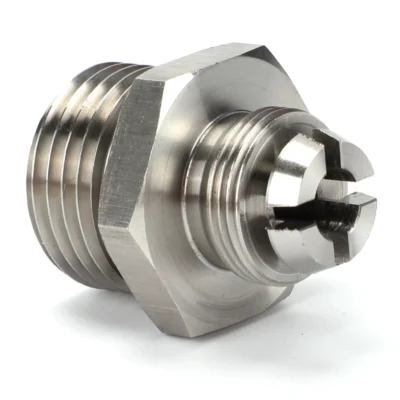
Stainless steel parts, machined to your drawing
CNC machining stainless steel components means cutting finished parts from solid stainless bar or
billet on turning and milling machines, straight from your 2D drawing or 3D file. Stainless is
stronger and tougher than aluminium or brass and it work-hardens as you cut it, so it takes sharp
tooling, rigid setups and the right feeds and speeds to hold tolerance and finish. That is the work
we do every day.
Davantech machines stainless to print at our factory in Dongguan, China, with European engineering
management. We run the three grades most parts call for, 303, 304 and 316, on CNC lathes and 3 and
4-axis mills. Every job gets a free DFM review before we cut, parts can be passivated for maximum
corrosion resistance, and material or mill certificates are available on request.
This page covers the grades we machine, the tolerances and finishes you can expect, our process,
and the parts stainless suits best. Stainless machining is part of our
CNC machining service. If you are still choosing a material,
see the full list of CNC materials, and for why buyers
source machined parts from us, read CNC machining in China.
What makes stainless worth the extra machining
Stainless costs more to cut than brass or aluminium, so it earns its place when the part has to
resist corrosion, carry load or stay clean for years. Here is what you get for it.
-
Corrosion resistanceResists rust, water and many chemicals. 304 covers most environments, and 316 handles chlorides, salt water and harsher exposure.
-
High strength and durabilityStrong and tough under load, with a long service life. It takes threads, shafts and load-bearing features without deforming.
-
Hygienic and easy to cleanNon-porous and wipe-clean, which suits food, beverage and laboratory hardware where cleanliness matters.
-
Temperature performanceHolds its strength across a wide temperature range, from cold outdoor use to hot process environments.
-
Essentially non-magnetic303, 304 and 316 are austenitic, so parts are non-magnetic when annealed, which suits sensors and electronics.
-
Clean, finishable surfaceTakes bead-blasted, brushed or electropolished finishes, and passivates for a bright, durable, corrosion-ready surface.
303, 304 and 316 compared
The grade sets the price, the corrosion resistance and how fast the part machines. These are the
three we run, and how to pick between them.
| Property | 303 free-machining | 304 general | 316 marine |
|---|---|---|---|
| Machinability (relative) | Best of the three | Medium | Toughest to cut |
| Corrosion resistance | Moderate | Good | Excellent |
| Molybdenum content | No | No | Yes, approx. 2 to 3% |
| Best suited to | Fittings, fasteners, turned parts | General parts, food-grade hardware | Marine, chemical, medical, outdoor |
| European equivalent | 1.4305 | 1.4301 | 1.4401 (316L: 1.4404) |
Rule of thumb: pick 303 for easy-machining fittings and fasteners, 304 for general and food-grade parts, and 316 whenever the part sees salt water, chemicals or the outdoors. Tell us the environment and we will confirm the grade before cutting.
Five steps, the same on a prototype or a production run.
Finishes for stainless parts
Stainless ships as-machined for most jobs. When the part is visible, has to stay clean, or needs
maximum corrosion resistance, we add a finish to your spec.
Tolerances: we typically hold ±0.025 mm on critical features, with general dimensions to ISO 2768. See CNC machining tolerances explained for how to call them out on your drawing.
Parts we machine in stainless
Stainless turns up wherever a part has to survive corrosion, load or cleaning. These are the jobs it
does best.
- Valve bodies
- Hose and pipe fittings
- Couplings and adapters
- Manifolds
- Custom bolts and studs
- Shafts and pins
- Spacers and standoffs
- Threaded inserts
- Hygienic fittings
- Nozzles
- Brackets and mounts
- Housings
- 316 hardware
- Brackets and fixings
- Pump and sensor parts
- Enclosure components
Stainless machining questions
Which stainless grade should I choose, 303, 304 or 316?
Choose 303 for easy-machining fittings and fasteners with moderate corrosion needs, 304 for general and food-grade parts, and 316 when the part sees salt water, chemicals or the outdoors. We machine all three, so tell us the environment and we will confirm the grade before cutting.
What tolerances can you hold on stainless steel parts?
We typically hold plus or minus 0.025 mm on critical features, with general dimensions to ISO 2768. Stainless work-hardens, so we use sharp tooling and rigid setups to hold tight tolerances. Send your drawing and we will confirm what is achievable.
Is stainless steel more expensive to machine than brass or aluminium?
Yes. Stainless is tougher and work-hardens, so it machines slower and wears tools faster, which raises the machining cost per part. We keep it down with the right grade choice, tooling and feeds, and by advising 303 where corrosion needs allow it.
Do you passivate stainless steel parts?
Yes. Passivation to remove free iron and maximise corrosion resistance is available on request, along with bead-blasted, brushed and electropolished finishes.
Are your stainless parts non-magnetic?
303, 304 and 316 are austenitic, so parts are essentially non-magnetic in the annealed condition. Heavy cold work can raise slight magnetism, but for most machined parts they read as non-magnetic.
Do you provide material certificates?
Yes. Material or mill certificates are available on request, and we work to an ISO 9001:2015 quality system with full inspection before parts ship.