
As an aluminum enclosures manufacturer, we make your custom made electronic enclosures affordable and fast. In addition, we offer 3D modeling services and accurate manufacturing. We design and produce electronic aluminum enclosures on demand. As we often say, there is a solution for every project.
Does your new product require a standard aluminum enclosure or a custom made enclosure? Then take a look at our broad range of electronic casings made of CNC machined aluminum parts, extruded or die casted housings. To clarify, each type of enclosure has its benefits and limitations in terms of cost versus added features. As a result, Davantech is a Chinese enclosures factory with lots of experience in electronic enclosures manufacturing in aluminum and plastic.
Aluminum Enclosures Manufacturer in China: why order electronic housings at Davantech?
Our offer:
- Extruded aluminum enclosures
- Machined electronic enclosures
- Fully customized – CAD service
- In-house parts manufacturing and assembly
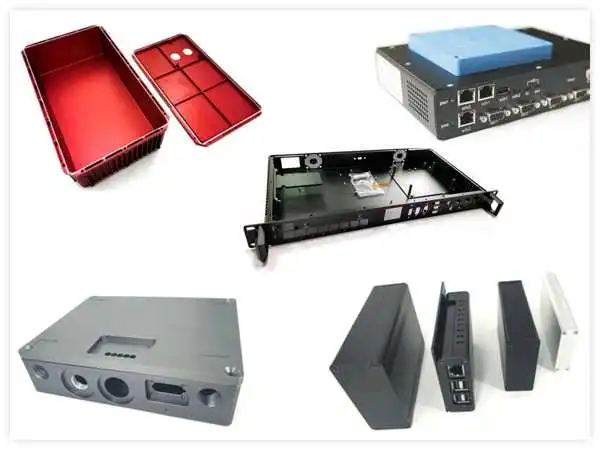
What are the 6 types of aluminum enclosures we fabricate?
- Extruded aluminum enclosures
- Casted aluminum enclosures
- Sheetmetal enclosures
- CNC machined housings
- Forged enclosures with milling
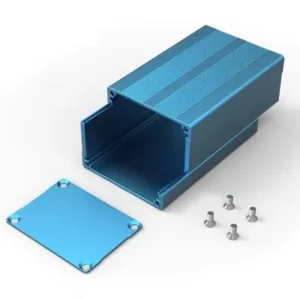
1. Extruded Aluminum Enclosures:
-
-
- These enclosures are formed by pushing aluminum through a die, resulting in a specific cross-sectional shape.
- Extruded aluminum enclosures are often used when a standardized shape is required with minimal machining.
- They are typically cost-effective for large production runs and offer good durability and heat dissipation due to the properties of aluminum.
-
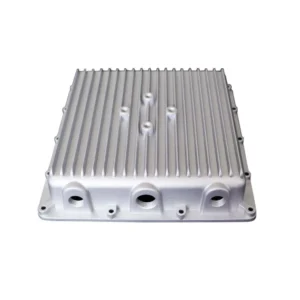
2. Cast Aluminum Enclosures:
-
-
- Cast aluminum enclosures are made by pouring molten aluminum into a mold, allowing it to cool and solidify into the desired shape.
- This method allows for complex shapes to be formed with relatively low tooling costs.
- Cast aluminum enclosures can be more suitable for smaller production runs or when intricate designs are needed.
-
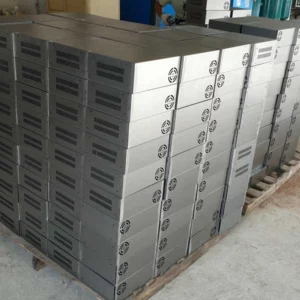
3. Sheet Metal Enclosures:
-
-
- These enclosures are made by cutting and bending sheets of aluminum to form the desired shape.
- Sheet metal enclosures are highly customizable and suitable for various shapes and sizes.
- They are often used when flexibility in design is crucial or when prototyping due to relatively low tooling costs.
-
4. CNC Machined Housings:
-
-
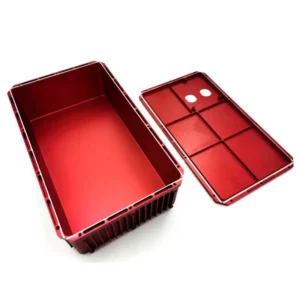
- CNC (Computer Numerical Control) machining involves cutting away material from a solid block of aluminum to create the desired shape.
- CNC machined housings offer high precision and can accommodate complex geometries with tight tolerances.
- They are commonly used for prototyping or low to medium volume production where precision and customization are essential.
-
5. Forged Enclosures with Milling:
-
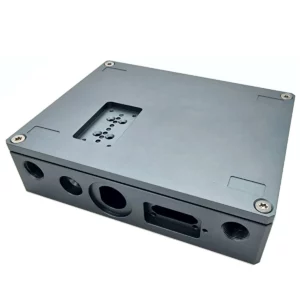
- Forged aluminum enclosures are created by subjecting aluminum to high heat and pressure to shape it.
- After forging, milling is often used to refine the shape and achieve tight tolerances.
- This method results in enclosures with excellent strength and durability, suitable for demanding applications.
Why order aluminum enclosures at Davantech?
Because , as an aluminum enclosures manufacturer, we make your custom made electronic enclosures affordable and fast. In addition, we offer 3D modeling services and accurate manufacturing. We design and produce electronic aluminum enclosures on demand. As we often say, there is a solution for every project. Does your new product require a standard aluminum enclosure or a custom made enclosure? Then take a look at our broad range of electronic casings made of CNC machined aluminum parts, extruded or die casted housings. To clarify, each type of enclosure has its benefits and limitations in terms of cost versus added features. As a result, Davantech is a Chinese enclosures factory with lots of experience in electronic enclosures manufacturing in aluminum and plastic.
Standard off-the-shelf aluminum enclosures.
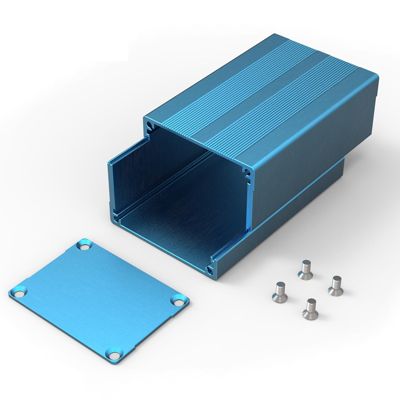
We make standard aluminum enclosures with extruded parts, for instance. More specific, those extruded parts form a set with a front and a rear plate. Buying these housings online or in the local shop is easy. However, these enclosures are often already anodized. We have split case and single case extruded housings. In addition, another type of ready-made housings is made of molded or casting aluminum. As a result, these enclosures are not made to fit your electronic PCB. Unfortunately, they have many restrictions.
- You have to adapt the aluminum housing to your electronics. Usually we use our milling machines to do this job. After the milling process we have to anodize or powder coat again.
- There is no freedom in shape and design.
- Dimensions are fixed and they are not optimal to your electronics.
A standard enclosure is a good solution for small series. More specific, one of the reasons is that there is no investment in molds. Davantech has its own aluminum extrusions to make electronic enclosures. These extrusions have no surface treatment yet, which is a benefit in case you need to machine the parts. We CNC machine the aluminum parts. Hence, we offer sandblasting and brushing as a surface finish as well as anodizing and powder coating.
Custom made aluminum enclosures.
Davantech makes your custom aluminum box conform your specifications. Custom made aluminum enclosures give you many possibilities. For instance, we design your desired shape and form. As a result, we add all possible features to the design. In addition, we determine the optimal position of connectors and ventilation holes. next, LED indicators and fixation points are implemented similarly. There is an interaction between the development of the electronic PCB and the design of the housing. Once the design is ready, the result is a well engineered unit. We design some custom made aluminum housings following a standard. Among those standards are 19″ rack or 24″ rack modules. Other housings have total freedom of design.
Designing and manufacturing of aluminum housings.
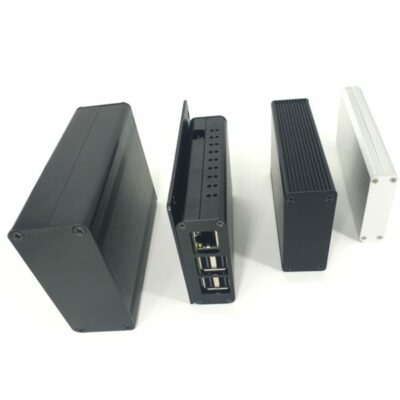
We design aluminum casings and follow the requirements of our customers. As a result, we choose the appropriate production technique by evaluation of those requirements.
- Cost.
- Environmental specifications : shock, vibration and IP-rating.
- Standards such as 19 inch rack.
- Surface treatment.
Davantech offers the following types of aluminum enclosures:
- CNC milling, starting from a block of aluminum.
- Extruded aluminum housing.
- Injection molding or casting.
- Pressing and CNC milling.
- Sheetmetal.
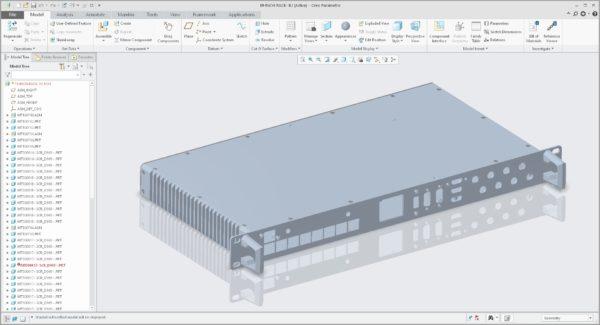
Watch this video: Designing Aluminum Electronic Casings.
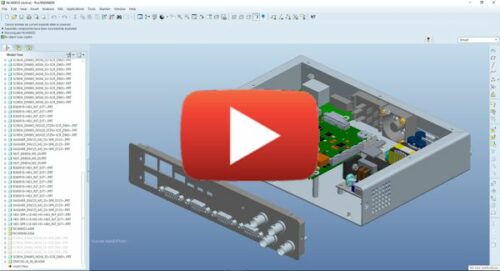
In this video we show you how we design custom made electronic enclosures following our customers needs. In this case we make 3D models of all components. We import the printed circuit boards and fit them into the design. Next, we add all connector holes and ventilation openings. Our design engineers will strive to obtain a compact, yet produce able product.
Contact us with your requirement for designing and manufacturing custom aluminum housings.