
An IP (Ingress Protection) rating, defined by IEC 60529, tells you exactly how well an enclosure keeps out dust and water. The two digits are not a marketing score; each one maps to a specific test. Getting the rating right matters because over-specifying adds cost and under-specifying puts electronics at risk. This guide decodes the IP code, compares the ratings you will actually specify, and explains how an enclosure is sealed to reach them. Davantech builds sealed aluminium enclosures and IP68 overmolded cable assemblies to these standards.
What the second digit means
The second digit usually decides your rating. Each level includes the protection of the levels below it, with one important exception noted under the table.
The exception: IP67 and IP68 test static immersion, not directed jets, so an immersion rating does not automatically guarantee IP65/66 jet resistance. Products that must survive both are tested and marked for both, for example IP66/IP68.
IP65 to IP68 at a glance
How IP testing is done
Ratings are verified on a representative sample in controlled lab conditions, following the IEC 60529 test methods. The dust digit and the water digit are tested separately, each with its own procedure.
- Dust test (first digit 6)The enclosure is placed in a chamber filled with fine talcum powder while a vacuum draws a slight negative pressure inside it for a set time. To pass IP6X, no dust may enter the enclosure.
- Jet test (second digit 5 and 6)Water is sprayed from a standard nozzle from every direction at a defined flow rate and distance: a 6.3 mm nozzle for the "5" level and a 12.5 mm nozzle at higher volume for the "6" level. Test time scales with the size of the enclosure.
- Immersion test (second digit 7 and 8)The enclosure is submerged in water. For "7" the lowest point sits at 1 m depth (or the top under 150 mm) for 30 minutes. For "8" it is submerged at a depth and duration agreed with the maker, more severe than the "7" test.
Note: the water tests check static jets and immersion separately, not both at once, which is why an IP67 or IP68 rating does not automatically include IP65/66 jet resistance.
Reaching the rating in production
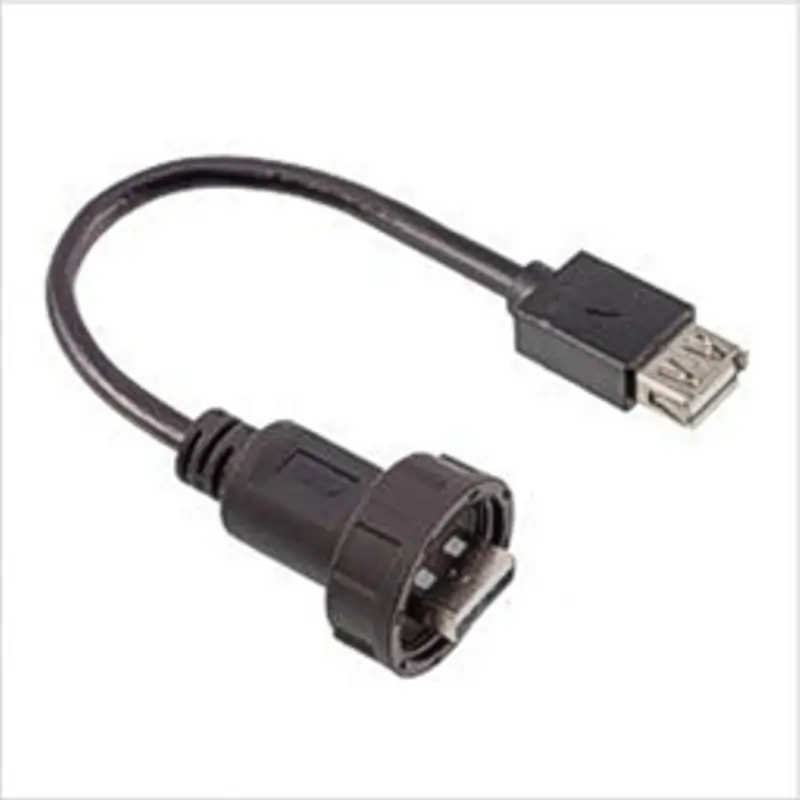
Typical sealed products
- Offshore and deck enclosures
- Marine connectors
- Outdoor control boxes
- EV charging connectors
- Vehicle exterior electronics
- Battery and sensor housings
- Wash-down equipment
- Buried or submerged sensors
- Instrumentation housings
IP rating questions
Is IP68 always better than IP67?
For water depth, yes: IP68 covers continuous immersion while IP67 covers only 1 m for 30 minutes. But both test static immersion, so neither digit guarantees resistance to high-pressure jets. If your part faces both submersion and jetting, ask for a combined marking such as IP66/IP68.
What is the difference between IP65 and IP67?
Both are dust-tight. IP65 is tested against water jets and suits rain and hose-down. IP67 is tested by immersion in 1 m of water for 30 minutes and suits parts that may be briefly submerged. IP65 enclosures are simpler and cheaper to build, so specify IP67 only if immersion is realistic.
What does the K in IP69K mean?
IP69K covers close-range, high-pressure, high-temperature spray-down, the kind used to clean food and vehicle equipment. It is defined in ISO 20653 rather than IEC 60529. It is a specialised rating; most outdoor products do not need it.
Which gasket material do you use for sealing?
We use TPE or TPU gaskets and O-rings, chosen for the temperature range and chemical exposure. The gasket sits in a machined groove with controlled compression. Material selection and groove design are set for the application; tell us the environment and target rating.
Do you test the finished enclosure to its IP rating?
We build to the target rating and can verify sealing before shipment. For formal certification to a specific IP class, testing is done to the relevant standard; tell us what evidence you need and we will agree the test plan up front.