
Drilling and milling are fundamental processes in machining, each serving distinct purposes in shaping materials. While both involve removing material from a workpiece, they differ significantly in their methods, tools, applications, and outcomes. In this text we are comparing drilling and milling: key differences and applications.
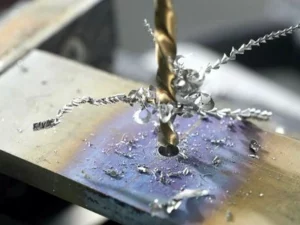 Drilling Explained
Drilling involves creating cylindrical holes in a workpiece using a rotating cutting tool called a drill bit. The primary purpose of drilling is to generate holes with precise dimensions and depths. This process is commonly employed in manufacturing to create holes for fasteners, such as screws, bolts, and rivets, or to accommodate shafts, pins, and dowels.
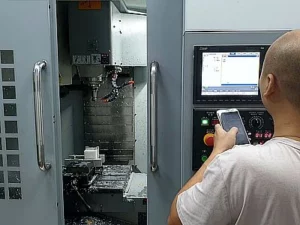 Milling Process
Milling, on the other hand, is a versatile machining operation that involves cutting away material from a workpiece using a rotating multi-point cutting tool called a milling cutter. Unlike drilling, milling can produce a wide range of shapes, including flat surfaces, slots, gears, threads, and complex contours. It is a highly adaptable process used in various industries for manufacturing components with intricate geometries.
Differences between Drilling and Milling
One key distinction between drilling and milling lies in the type of motion involved. Drilling typically employs a linear motion of the drill bit along the workpiece’s axis, resulting in a straight hole. In contrast, milling involves simultaneous rotational and linear movements of the milling cutter relative to the workpiece, enabling it to cut material along different axes and directions. Another difference is the nature of the tools used. In drilling, the primary tool is the drill bit, which has a pointed end for initiating the hole and flutes along its length for chip evacuation. Drill bits come in various designs optimized for specific materials and hole diameters. Conversely, milling utilizes a variety of milling cutters, each designed for specific applications, such as end mills, face mills, and ball mills. These cutters feature multiple cutting edges that enable efficient material removal.
Different Cutting Mechanisms
Additionally, the cutting mechanisms in drilling and milling differ significantly. In drilling, the cutting action primarily involves axial forces as the drill bit penetrates the workpiece, shearing off material along its path. This process is relatively straightforward, focusing on removing material to create a hole with precise dimensions. In contrast, milling involves a more complex cutting action, with the milling cutter simultaneously engaging multiple points on the workpiece. This results in various types of forces, including radial, axial, and tangential forces, contributing to the generation of different surface geometries. Moreover, the applications of drilling and milling vary based on their capabilities and limitations. Drilling is predominantly used for producing simple holes in materials such as metal, wood, plastic, and composites. It is commonly employed in industries like aerospace, automotive, construction, and electronics for assembly and fastening purposes. Conversely, milling finds extensive application in manufacturing intricate components with precise dimensions and complex shapes. Industries such as aerospace, automotive, medical devices, and mold making rely heavily on milling for producing prototypes, tooling, dies, and custom parts.
Milling and Drilling have a Different Purpose
Furthermore, the level of precision achievable differs between drilling and milling operations. Drilling is generally suited for producing holes with high accuracy in terms of diameter and depth. Modern drilling machines equipped with advanced features like CNC (Computer Numerical Control) can achieve tight tolerances and repeatability. However, milling offers greater flexibility and precision in shaping workpieces, allowing for tighter tolerances, smoother surface finishes, and intricate details. Another factor to consider is the material removal rate (MRR), which varies between drilling and milling. Drilling typically results in a lower MRR compared to milling due to its single-point cutting action and limited engagement with the workpiece. In contrast, milling can achieve higher MRRs by employing multiple cutting edges simultaneously, enabling faster material removal and shorter machining times.
Different Machines for Drilling and Milling
Additionally, the setup and operation of drilling and milling machines differ in complexity. Drilling machines are relatively simpler in design and operation, typically requiring minimal setup and fewer machining parameters to adjust. They are well-suited for high-volume production of simple holes. In contrast, milling machines come in various configurations, ranging from manual mills to sophisticated CNC machining centers. Setup and operation involve considerations such as tool selection, workpiece clamping, toolpath programming, and cutting parameters optimization, making milling more complex but offering greater versatility and control. In conclusion, while comparing drilling and milling, their key differences and a pplications, both drilling and milling are essential machining processes used in manufacturing, they differ significantly in their methods, tools, applications, and outcomes. Drilling is primarily focused on creating precise holes in workpieces, whereas milling offers greater versatility in shaping materials and producing complex geometries. Understanding the distinctions between drilling and milling is crucial for selecting the most appropriate machining method based on the specific requirements of a given application.
Drilling vs Milling Questions
Common questions about the differences between drilling and milling in CNC machining.
What is the main difference between drilling and milling?
Drilling creates round holes by feeding a rotating drill bit axially into the workpiece. The tool only cuts downward. Milling removes material in multiple directions (X, Y, Z) using a rotating multi-flute cutter, allowing it to create flat surfaces, pockets, slots, contours, and 3D shapes. Drilling is a single-purpose operation; milling is versatile and can produce almost any geometry.
Can a milling machine also drill holes?
Yes. A CNC milling machine can perform drilling by mounting a drill bit in the spindle and feeding it axially into the workpiece, just like a drill press. Most CNC milling programs include drilling cycles (G81, G83 peck drilling) alongside milling operations. This is standard practice: the machine drills all holes and then switches to a milling cutter for pockets and contours, all in one setup. A dedicated drilling machine is only needed for very high-volume hole-only production.
What is the difference between a drill bit and an end mill?
A drill bit cuts only on its tip and is designed for axial (downward) cutting to create holes. An end mill has cutting edges on both the tip and the sides, allowing it to cut sideways, plunge, ramp, and contour. You cannot side-cut with a drill bit; you cannot efficiently drill deep holes with an end mill. In CNC machining, both tools are used in the same program: drill bits for holes, end mills for everything else. See our CNC cutting tools guide for a full comparison of tool types.
Which process is more accurate: drilling or milling?
Milling is more accurate for most features. A standard drill produces holes with ±0.1 mm tolerance and rough surface finish (Ra 3.2 to 12.5 µm). Milling can achieve ±0.02 mm tolerance and Ra 0.8 to 3.2 µm on surfaces and bores. For precise holes, drill first and then ream to H7/H6 tolerance, or use a boring cycle on the milling machine. See our tolerances guide for detailed tolerance ranges by process.
When should I use drilling instead of milling?
Use drilling when you need round holes and standard accuracy is sufficient (±0.1 mm). Drilling is faster than helical milling a hole because the drill removes material in a single plunge. For a part with 20 holes and no milled features, a drill press or drilling cycle is the most efficient approach. Use milling when you need pockets, slots, flat surfaces, contours, or when hole accuracy needs to be tighter than what a drill can achieve.
What is the difference between a drilling machine and a milling machine?
A drilling machine (drill press) moves the spindle only vertically (Z-axis). It can drill, ream, and tap, but cannot move sideways. A milling machine moves in X, Y, and Z (3-axis minimum), allowing it to cut in any direction. CNC milling machines can do everything a drill press does plus milling, contouring, and pocketing. In modern CNC shops, standalone drill presses are used only for simple manual work; CNC milling machines handle both drilling and milling operations in one setup.
Which process removes material faster?
Milling has a higher material removal rate (MRR) because it uses multi-point cutters that engage more material per revolution. A 20 mm end mill with 4 flutes removes material from the side and bottom simultaneously. A 10 mm drill removes material only from the tip. However, for creating a simple round hole, drilling is faster because it's a single plunge operation. Milling the same hole would require a helical interpolation path that takes longer.
Can I use milling instead of drilling for holes?
Yes, using a technique called helical milling or circular interpolation. The end mill follows a helical path to create the hole. This is useful when the hole diameter is larger than available drill bits, when you need a flat-bottom hole, or when you need very accurate diameter control without reaming. The downside is slower cycle time compared to drilling. For production work with many standard-sized holes, drilling plus reaming is faster and cheaper than helical milling.
How do drilling, reaming, and tapping work together?
These three operations are often performed in sequence on the same hole. First, drill the hole to rough size. Then ream it if a precise diameter is needed (H7/H6 tolerance for press fits, bearing seats, or dowel pins). Or tap it if a thread is needed (M3, M4, M5, etc. for fasteners). A single CNC program handles all three operations in one setup by changing tools automatically. See our reaming, drilling, and tapping guide for more detail.