
Mold Manufacturing & Injection Molding in China
Davantech helps OEMs take custom plastic parts from design review to production in China. We design the mold, coordinate tooling manufacture, run the mold trials and injection mold the approved parts. We can also assemble the parts when the project calls for it.
Share your part drawing or STEP file, expected quantities and the requirements that matter for fit, appearance and performance. We can review the design and quote the tooling and molded parts separately.
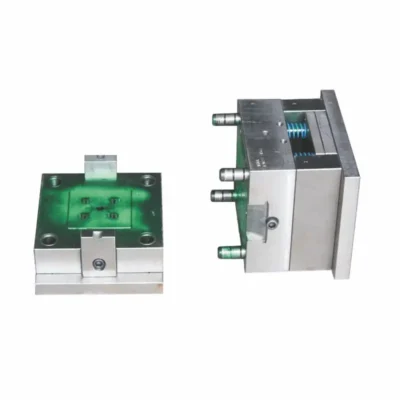
Design Review Before Tooling
How We Plan the Injection Mold
We match the tool to the part geometry, resin and production volumes. A single-cavity mold makes one part per cycle. A multi-cavity mold makes more than one, and a family mold combines different components when their molding conditions are compatible. Gate location, cooling, ejection and tool material all influence the finished part and the economics of the run.

Injection side
The side that receives the plastic and directs it into the cavity.
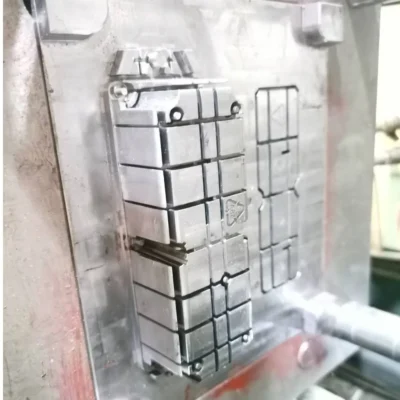
Ejector side
The side with the mechanism that releases the part after the mold opens.
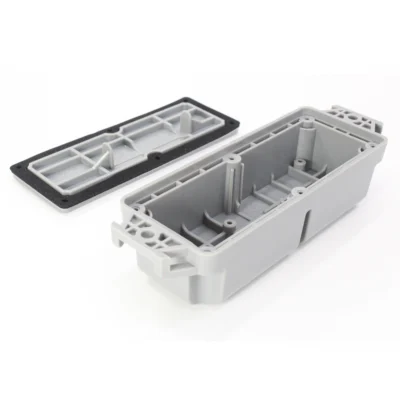
From Mold Trials to Production
Choose the Resin for the Application
Tell us what the part needs to withstand and which properties matter most. A resin choice can affect shrinkage, tooling, part finish and what needs to be checked during sampling.
- Housings and visible parts. Consider impact, appearance, transparency and exposure. Existing material options include ABS, ASA, PC and PMMA.
- Mechanical parts. Where stiffness, wear or sliding fit matter, give us the load and contact conditions. PA and POM are among the materials we mold.
- Other requirements. Discuss PP, TPU or PVDF according to the application. If a grade is specified, include the full material designation.
Examples of Molded Parts
Different requirements drive different choices in tooling, resin and how we check the finished part.
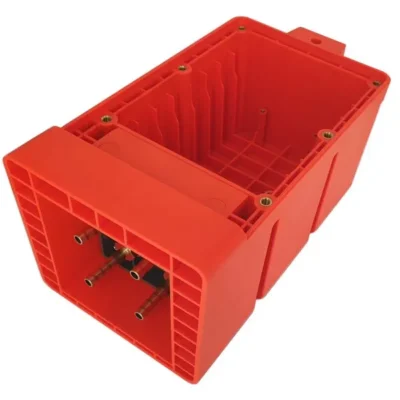
ASA enclosure
A molded shell with features for mounting and assembly.
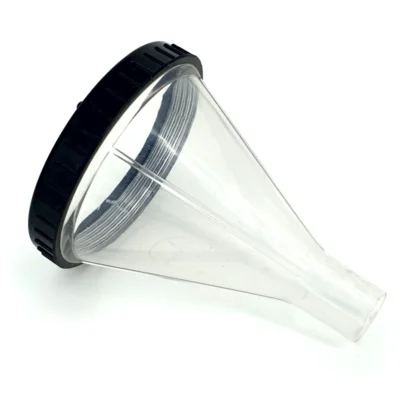
Clear polycarbonate part
Surface finish and gate location matter on visible areas.

Molded fan impeller
A molded part with thin blades and a thicker hub.
Request a Tooling and Molding Quote
Send a STEP file or drawing and tell us how you plan to use the part. We can review the design and quote the mold and molded parts separately.
- Planned order quantities and expected yearly demand
- Resin or performance requirements, color and surface finish
- Critical dimensions, mating parts and sample requirements
Tooling and Molding Questions
Can you review my design before the mold is made?
Yes. Send the part model, drawing and any known fit or appearance requirements. We review which features affect molding or tool cost and discuss design changes before tooling starts.
How do you choose a single-cavity or multi-cavity mold?
We compare the planned quantities, part size, resin and cost per part. A multi-cavity tool can produce more parts per cycle, but it also changes the tooling cost and the requirements for filling and cooling.
What should I check on the first molded samples?
Agree the critical dimensions and fit checks beforehand. Review the samples against the drawing and mating parts, and check the appearance on visible surfaces before approving the production run.
Can you assemble the molded parts after production?
Yes. Include the parts to be fitted, who supplies them and any inspection or packing requirements. We can quote assembly alongside molding.
Can you quote a project if the exact resin is undecided?
Yes. Tell us about temperature, exposure, loads and appearance. If your drawing already specifies a resin grade, send the grade so we can quote against it.